A $2,000 speaker budget can buy a satisfying stereo setup—or leave you with speakers you cannot connect to anything. The difference is whether you already own an amplifier, how much space you have and whether you want music in front of you or movie sound around you.
For a passive stereo pair, start with the KEF Q Concerto Meta. For a simpler TV-and-music system with amplification built in, consider the KEF LSX II LT. The ELAC Debut 3.0 DB63 leaves much more of the budget for an amplifier and stands.
Below, you will also find a floorstanding option and a compact 5.1 configuration. Choose the route that fits your room and equipment; you do not need to spend the full $2,000 to make a useful upgrade.
Which speakers fit your budget?
The $2,000 limit here covers the stereo pair or stated speaker-and-subwoofer configuration, before tax. A separate amplifier or AV receiver, stands and connection cables cost extra unless the row says otherwise. If $2,000 is your limit for everything, include those costs before ordering.
| Option | Good fit for | Checked price and quantity | What else you need |
|---|---|---|---|
| ELAC Debut 3.0 DB63 | A lower-cost passive stereo system | $469.99 for a black pair | A compatible amplifier; stands or suitable furniture; speaker wire |
| KEF Q Concerto Meta | A substantial standmount pair with separate electronics | $999.99 for a black pair | An amplifier suitable for a 4-ohm load; support and speaker wire |
| Klipsch RP-8000F II | A room with space for full-size towers | $1,159.98 for the walnut pair listing | A compatible amplifier or receiver; speaker wire |
| KEF LSX II LT | A compact powered music, desktop or stereo TV system | $959.91 for a sage-green pair | A source connection as needed; no separate power amplifier |
| Five SVS Prime Satellites + SB-1000 Pro | Discrete 5.1 sound with compact speakers | $1,472 total: $349 pair + $524 three-pack + $599 subwoofer | A 5.1-capable AV receiver, wiring and suitable speaker supports |
Passive speakers need an amplifier between the source and the speakers. Powered speakers include amplification, but their inputs still have to match your equipment. Our active vs passive speaker guide explains that basic distinction.
ELAC Debut 3.0 DB63: leave room for the rest of the system
The DB63 is the sensible starting point if you are building a system from scratch. At the checked pair price, it leaves over $1,500 before tax for electronics, stands and other essentials. That flexibility matters more than buying a more expensive speaker and pairing it with equipment that does not suit it.
It is a passive two-way design with a 6.5-inch woofer and a 1-inch aluminum-dome tweeter. ELAC specifies a nominal 6-ohm load and 87dB sensitivity at 2.83V/1m. Choose amplification documented for that load; the speakers’ power-handling figure is not a built-in amplifier rating.
Allow for the cabinet size: each speaker is approximately 13.3 inches high and 11.7 inches deep. A narrow shelf may not offer enough space once cables and placement clearance are included. Stands can give you more freedom to position them.
Choose it when: you want an affordable passive pair and a balanced total-system budget. Choose another route when: you want direct HDMI TV connection or streaming without separate electronics; the LSX II LT is simpler for those jobs.
Check the ELAC DB63 black pair on Amazon.
KEF Q Concerto Meta: a three-way standmount option
Consider the Q Concerto Meta if you want a larger standmount pair and plan to keep your amplifier and sources separate. Its three-way design uses a dedicated bass driver alongside KEF’s Uni-Q midrange-and-tweeter array, rather than asking one cone to cover both bass and midrange.
That describes how it is built, not a guarantee that it will sound better than every two-way speaker. Compare it in your room if possible, especially against a less expensive pair that leaves money for better placement or a subwoofer.
Amplifier matching deserves attention. KEF lists 4-ohm nominal impedance, a 3.2-ohm minimum and 85dB sensitivity at 2.83V/1m. Use an amplifier whose manufacturer supports the load. Do not decide from a large wattage number alone.
These are also substantial cabinets: about 16.3 inches high, 8.3 inches wide and 12.4 inches deep each, before allowing for cables and clearance. Budget for stable supports. The advertised speaker-pair price does not include stands or an amplifier.
Choose it when: you want a three-way passive pair and have suitable electronics and space. Choose the ELAC instead if the lower purchase cost makes a complete, well-positioned system easier to afford.
Check the KEF Q Concerto Meta black pair on Amazon.
Klipsch RP-8000F II: towers for a room that can accommodate them
The RP-8000F II is the floorstanding route here. Each cabinet combines two 8-inch woofers with a horn-loaded tweeter. It avoids the need for separate speaker stands, but it still needs an amplifier or receiver and enough floor space for placement.
The current II-generation design is the replacement choice here for the original article’s RP-280F recommendation. Listen to the specific model if you can; neither the horn nor the larger woofers establishes how you will prefer its tonal balance.
Check quantity carefully. Many RP-8000F II listings sell one speaker. The walnut listing linked below explicitly includes two; its $1,159.98 checked price is for the pair, not $1,159.98 per cabinet.
These are ordinary front-channel speakers, not built-in Atmos height speakers. A two-speaker purchase gives you stereo. Surround or height channels require additional speakers and suitable receiver support, and deep movie effects may still justify a separate subwoofer.
Choose it when: you want towers and can position two large cabinets sensibly. Choose a standmount or compact powered pair if the towers would be wedged into corners or obstruct the room.
Check the Klipsch RP-8000F II walnut pair on Amazon.
KEF LSX II LT: fewer boxes for music, a computer or TV
The LSX II LT is the compact option when you do not want a separate amplifier. The pair includes amplification and network streaming, with HDMI ARC, optical and USB-C audio inputs for compatible sources. It also supports AirPlay 2, Google Cast and Bluetooth.
KEF specifies a wired connection between the two speakers. The primary speaker plugs into mains power and powers the secondary through the supplied proprietary interspeaker cable. Use that cable or KEF’s compatible C-Link extension option, rather than assuming any USB-C charging cable will work.
Check the inputs against what you own. The LT has no analog line or phono input. A turntable with only RCA output is not a direct connection. A CD player with compatible optical output is a more straightforward match. For TV, use the TV’s ARC port and the supported audio settings; this is stereo TV sound, not a discrete 5.1 system.
There is a subwoofer output if you want to add bass later. With small cabinets and 4.5-inch bass/midrange drivers, it is the space-saving choice here, rather than the default choice for loud listening across a large room.
Choose it when: compact size, digital connections and fewer separate components matter. Choose passive speakers plus an appropriate amplifier if analog sources, replaceable electronics or future receiver-based surround expansion are more important.
Check the KEF LSX II LT sage-green pair on Amazon. Check for the LT suffix; standard LSX II listings have different features and prices.
SVS Prime Satellites and SB-1000 Pro: a compact 5.1 route
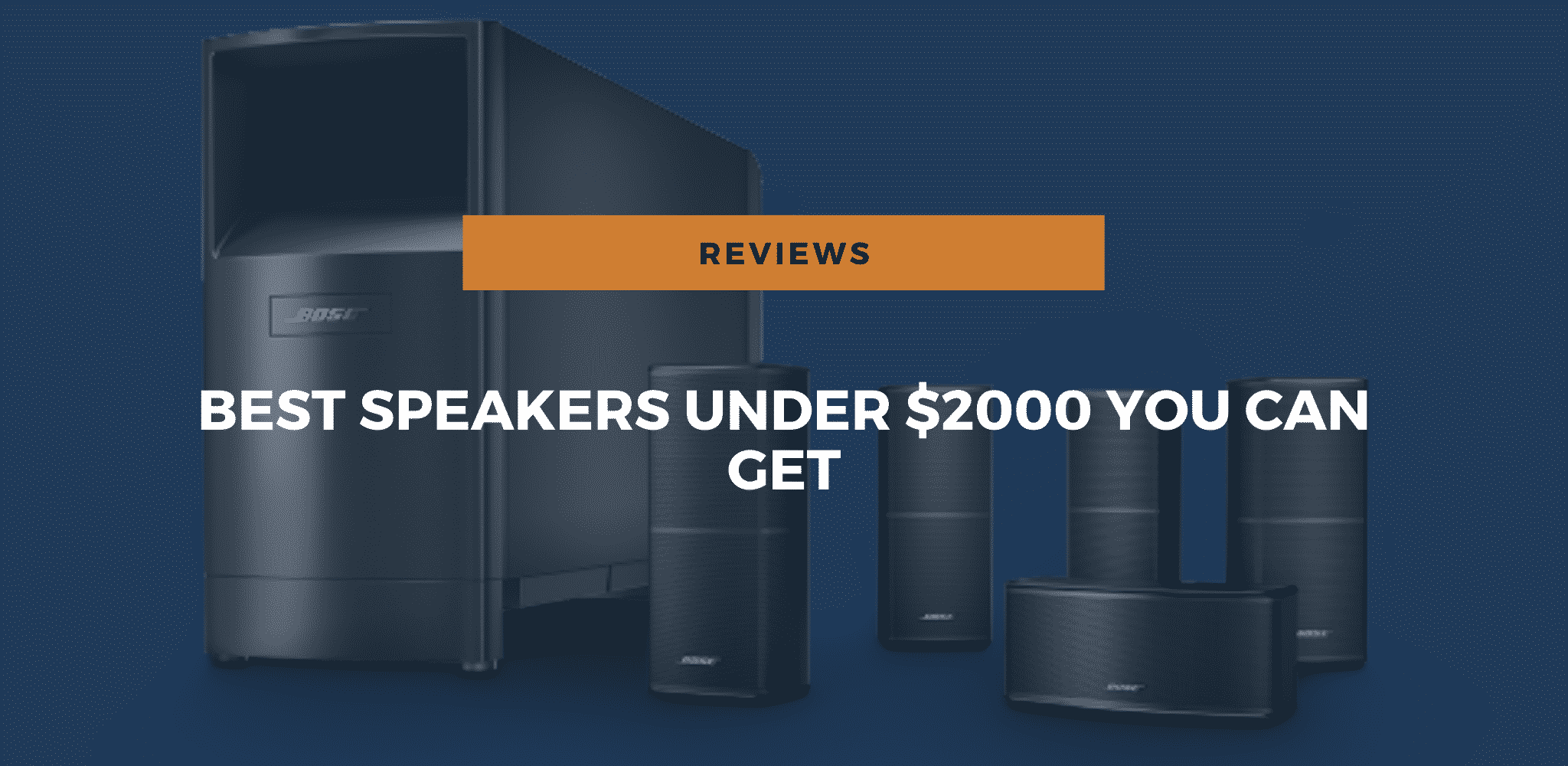
If movie surround sound matters more than a two-speaker music system, five matching Prime Satellites and an SB-1000 Pro form a compact 5.1 configuration. SVS also uses those models in its current packaged system.
The Amazon route checked here is three separate purchases, not one bundled offer: a pair of satellites, a three-pack of the same satellites and one powered subwoofer. The satellite cabinets are Piano Gloss Black; the subwoofer is Black Ash, so the finishes are not identical.
SVS Prime Satellite pair in Piano Gloss Black — $349 for two.
SVS Prime Satellite three-pack in Piano Gloss Black — $524 for three.
SVS SB-1000 Pro in Black Ash — $599 for one powered subwoofer.
The $1,472 speaker-and-subwoofer total leaves $528 of a $2,000 budget before tax. That remaining amount must cover any receiver, cables and supports you still need; do not assume it buys a complete installed system.
You need an AV receiver to decode the surround signal and amplify the five passive speakers. The subwoofer’s built-in amplifier powers the subwoofer, not the satellites. Position the satellites as front left, center, front right and two surrounds; follow the receiver and SVS instructions for bass management and calibration.
Choose it when: you want separate surround channels without large speaker cabinets. Choose a stereo pair instead if music is the priority, you cannot place rear speakers, or you want less wiring. Five satellites do not create Atmos height channels by themselves.
Three checks before spending your budget
1. Price the complete connection path
Write down the chain from your source to the speakers. A passive system needs an amplifier and speaker wire; a TV may also need a receiver or amplifier with the right digital input. A turntable needs a phono stage somewhere in the chain unless one is already built in.
For passive connections, see our guide to connecting speakers to an amplifier. Turn the equipment off before wiring, follow its terminal instructions and keep loose strands from bridging terminals. Never connect an amplifier’s speaker-level output to a powered speaker’s line input.
2. Measure the space, not just the cabinet
Allow room for cables, stands, ventilation around electronics and the manufacturer’s placement guidance. Start with the stereo speakers equally spaced from your main seat and tweeters near seated ear height, then adjust their distance from walls and their angle while listening.
A speaker fitting on a shelf does not establish that the shelf is a good position. For more compact passive options to compare, our bookshelf speaker guide is a useful next stop. Check its individual listings against your budget too.
3. Compare at comfortable, similar listening levels
Use familiar music, speech and—if relevant—movie scenes. Listen for understandable dialogue, bass that does not overwhelm the room and a balance you enjoy over a longer session. A louder demonstration can sound more impressive without being the better match.
Check the seller’s return terms and manufacturer warranty eligibility before buying. Ratings can help identify questions to investigate, but star averages do not replace an audition or tell you how a speaker will behave in your room. Avoid excessive volume and turn it down if you hear strain or distortion.
What about the older speakers in this guide?
Already own KEF R3, ELAC Debut 2.0 B6.2, JBL Studio 530, Polk TSi200 or Klipsch RP-280F speakers? Keep them if they work well in your system. A newer shortlist is not a reason to replace equipment you enjoy; placement or amplification may be the more useful change.
Used KEF R3 and Bose Acoustimass 10 Series V offers can still appear. Compare their condition, delivered cost, accessories and return terms with current alternatives. An Acoustimass system needs its correct module, wiring and a suitable receiver; do not assume an incomplete used package is ready to play.
The Logitech Z-5500 is a different kind of product: an older powered surround system with its own control hardware. It is not an interchangeable replacement for a passive speaker pair or an AV receiver system. For an existing unit, identify the available inputs and included parts before planning a connection.
Where to start
Building everything from scratch? Compare the ELAC DB63 plus suitable electronics with the simpler LSX II LT route first. Already have a suitable amplifier? Put the Q Concerto Meta on your audition list, or consider the RP-8000F II pair if towers fit the room.
For discrete movie surround, price the five SVS satellites and subwoofer together with the receiver. The best purchase is the one that covers your actual sources, seating and listening habits within the complete budget—not the one with the most drivers or the highest original list price.